This article delves into the multifaceted applications of Bps C1, exploring its significance in various industries. Bps C1 refers to a class of products or technologies utilized in several sectors, and its prominent role in streamlining processes and enhancing operational efficiency is crucial for organizations aiming for competitive advantage.
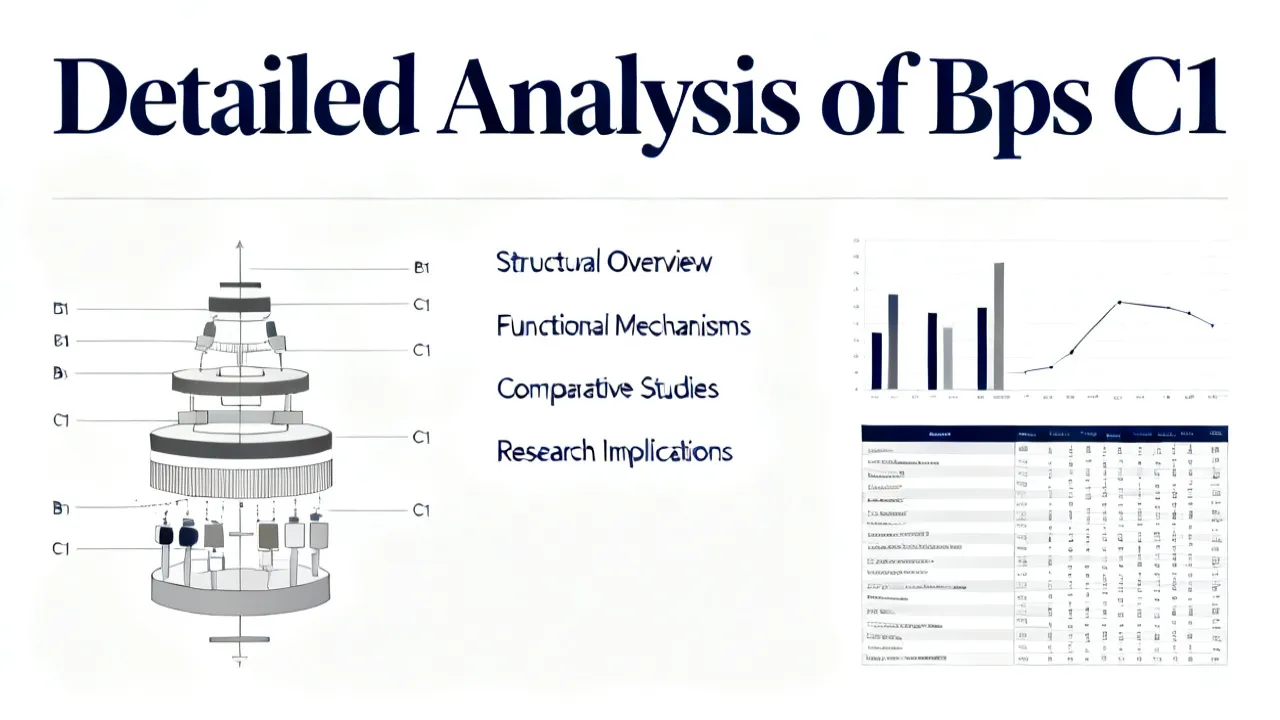
Bps C1 represents a specialized term often associated with business process solutions or technologies that enhance workflow and operational effectiveness. With the rapid technological advancements characterizing the contemporary industrial landscape, organizations increasingly turn to solutions like Bps C1 to improve efficiency, reduce costs, and optimize processes. Given its pervasive implications across industries, understanding its utility becomes a critical factor for businesses seeking to maintain a competitive advantage.
The concept of Bps C1 encompasses various methodologies and tools designed to streamline operations and provide a framework for continuous improvement. As companies face the pressures of globalization and the need for innovation, Bps C1 emerges as a leading approach to re-imagine processes fundamentally. This requires not just adopting technologies but also transforming organizational cultures to embrace agility and adaptability. Understanding Bps C1 is thus not only about the tools but also about fostering a mindset that prioritizes efficiency and effectiveness at every organizational level.
From manufacturing giants to service-oriented enterprises, the role of Bps C1 in organizational operations cannot be understated. By implementing Bps C1, businesses can automate mundane tasks, thereby allowing human resources to be allocated for more strategic functions. This automation leads to increased accuracy, consistency, and speed of business operations. Consequently, organizations witness enhanced productivity and reduced operational costs, providing a significant edge in a competitive market.
Moreover, Bps C1 solutions facilitate better resource management and allocation, leading to optimization in areas such as supply chain logistics and customer service delivery. For instance, in manufacturing, the implementation of Bps C1 might involve integrating robotics and IoT devices that not only streamline production lines but also provide real-time data for decision-making. In service-based industries, the benefits extend to customer interactions where Bps C1 can automate responses, allowing for 24/7 customer support. This flexibility enhances customer satisfaction and builds loyalty towards brands that leverage these efficiencies.
While Bps C1 finds application across various sectors, its role can be particularly noted in manufacturing, healthcare, and financial services. In the manufacturing sector, Bps C1 facilitates process automation, inventory management, and quality control, ensuring higher precision and output quality. By integrating advanced technologies such as Machine Learning and Artificial Intelligence, manufacturers can predict maintenance needs, thereby reducing downtime and ensuring continuous operations. This predictive maintenance model serves as a cornerstone for efficient inventory management as it minimizes waste and optimizes resource utilization.
Healthcare providers leverage Bps C1 for managing patient data, streamlining care delivery processes, and ensuring compliance with healthcare regulations. For example, electronic health record (EHR) systems equipped with Bps C1 capabilities can provide healthcare workers immediate access to patient histories, streamline appointment scheduling, and improve the overall workflow in hospitals. Greater data integrity achieved through these systems leads not only to enhanced patient outcomes but also to lowered operational costs.
In financial services, Bps C1 technologies aid in risk assessment, customer relationship management, and fraud detection, thus safeguarding sensitive financial information. Financial institutions can utilize automation for processing transactions and managing accounts, significantly reducing human error. Machine Learning algorithms can analyze patterns in transaction data to identify potentially fraudulent activities, providing a proactive approach to security and compliance.
Additionally, the retail sector is beginning to adopt Bps C1 strategies, aimed at enhancing customer experiences. e-Commerce platforms are often innovating their user interfaces and backend processes to ensure that customers experience seamless transactions, personalized recommendations, and efficient fulfillment processes, all backed by Bps C1 technologies.
Despite the advancing adoption of Bps C1, challenges remain, particularly concerning data security and the evolving regulatory environment. The handling of sensitive data necessitates robust security protocols to protect against breaches. Organizations must implement comprehensive security measures, including encryption, access controls, and regular audits to safeguard information. Additionally, data over-reliance on technology can pose risks if not managed carefully, as machine malfunction or cyber-attacks could disrupt operations drastically.
Furthermore, keeping up with regulatory changes requires adaptable solutions that can be swiftly altered to remain compliant. The financial and healthcare sectors, in particular, are subject to rigorous regulations that must be adhered to, highlighting the need for Bps C1 solutions that can quickly respond to legislative shifts and ensure compliance without falling behind operationally.
Looking forward, the integration of artificial intelligence and machine learning within the Bps C1 framework presents promising avenues for further advancements, offering heightened efficiency and predictive capabilities. Future innovations may lead to the development of self-learning systems capable of optimizing processes autonomously, representing an exciting frontier for businesses seeking to maximize their operational output. Moreover, the acceptance of collaborative robots (cobots), which work alongside human workers, may evolve as another dimension of Bps C1—enhancing productivity while ensuring safety and quality standards are upheld.
In addition, as sustainability becomes a critical concern across industries, the future of Bps C1 may also reflect a growing emphasis on eco-friendly processes and reduced environmental footprints. Companies are likely to depend on Bps C1 strategies to optimize resource utilization, minimize waste production, and implement energy-efficient operations that conform to sustainability standards.
| Industry | Key Features |
|---|---|
| Manufacturing | Automation, Quality Control, Inventory Management, Predictive Maintenance, Lean Manufacturing Practices |
| Healthcare | Data Management, Compliance, Process Optimization, Telemedicine Integration, Patient Engagement Tools |
| Financial Services | Fraud Detection, Risk Assessment, CRM, Regulatory Compliance Tools, Automated Reporting Systems |
| Retail | Customer Experience Optimization, Inventory Management, e-Commerce Solutions, Personalization Engines |
The implementation of Bps C1 solutions is not merely a trend but a vital step for organizations aiming to enhance their operational efficiency and competitive position in the marketplace. As the business landscape evolves, so too do the strategies and technologies employed to navigate it. Companies that embrace the nuances of Bps C1 will be better situated to adapt to changes, leverage new opportunities, and create value. The potential for ongoing improvement through Bps C1 serves as a reminder of the need for continuous innovation and the importance of strategic foresight. Thus, investing in comprehensive understanding and successful implementation of Bps C1 is paramount for any organization looking to thrive in today’s dynamic environments.






This guide explains how payroll teams typically access and configure Runpayroll.adp.com for reliable payroll processing. It provides objective background on why employee payroll portals matter, how authentication and permissions affect payroll controls, and what organizations should verify before running pay cycles. The focus remains on governance, accuracy, and operational readiness rather than marketing claims.

This guide explains how Runpayroll.adp.com fits into payroll operations, from setup to ongoing compliance and reporting. Background information covers why payroll portals matter, what organizations typically configure, and how an expert approach evaluates security, controls, and workflow. Readers will also find a comparison of onboarding paths, key conditions, and practical FAQs.

This guide reviews what people discuss on Justworks Reddit to help HR and small-business leaders evaluate payroll, benefits, and admin workflows objectively. The article summarizes common themes, explains what readers should verify, and offers a structured way to compare providers. Background context clarifies how community forums, vendor communications, and compliance realities shape user experiences.

This guide synthesizes what people commonly discuss in Justworks Reddit threads and turns it into practical, objective criteria for SMB decision-making. Background context is provided on what Justworks is, why HR/payroll conversations appear on Reddit, and how to evaluate providers without relying on hearsay or pricing rumors.

Kony DBX helps organizations plan, deploy, and optimize data handling for reliable application workflows. This guide explains what “Kony DBX” typically refers to in enterprise contexts, outlines selection and integration considerations, and offers practical steps and requirements. It also addresses governance, performance, and operational risks in an objective way, including an expert Q&A section for decision-makers.

This guide explains Kony Dbx in practical terms—how it fits into modern product workflows, what to evaluate when sourcing, and which conditions typically matter before purchase. Objectively, “DBX” concepts often relate to signal/processing or equipment configuration layers, while “Kony Dbx” is commonly used as a product/series name in procurement discussions.

This guide explains what Kony DBX is, how it fits into deployment workflows, and what to evaluate when choosing units or integrating suppliers. Objectively, it covers typical hardware/software considerations, procurement criteria, and operational requirements. It also includes a comparison table, a practical step-by-step checklist, and expert FAQs—helping you make defensible decisions for reliability, compliance, and maintainability.

Cash Management Services for Corporates help firms centralize liquidity, streamline payments, and improve visibility across banking relationships. This guide provides objective background on cash management, key service capabilities, and typical procurement considerations, focusing on corporate treasury needs such as payment controls, forecasting support, and operational governance.